

RFI answers for structural review
RFIs, structural drawings, and site photos, structured into one knowledge base. It finds similar past cases and drafts answers that cite the governing code clauses.
Draft RFI answers from similar past cases
- Customer
- CNP Dongyang
- Areas
- Review
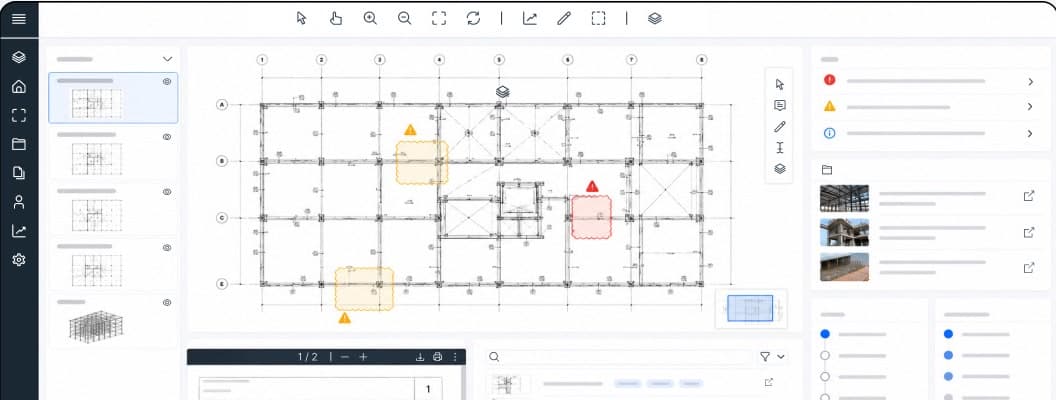
1Problem
Engineers searched drawings, codes and past cases manually to answer each RFI. Reviews were time-consuming, and response quality varied by engineer.
2Input
RFI questions, structural drawings, site defect photos, KDS/KCS code documents, past review cases
3How it works
OCR and vision AI structure the documents and photos, split them into meaningful chunks and tag them with metadata, building a knowledge base on a vector DB and GraphRAG. A review agent reads the intent of each question, judges defect type and severity, and recommends actions. Engineers' corrections flow back in to improve similar-case matching.
4Output
Draft RFI answers citing the governing code clauses, defect diagnosis reports, and the supporting evidence
Results
- Draft RFI answers generated from similar cases
- Engineers make the final call; AI cuts the drafting time
Could this work on your projects?
Tell us about your challenges, and we'll explain how a similar approach could apply.
More case studies
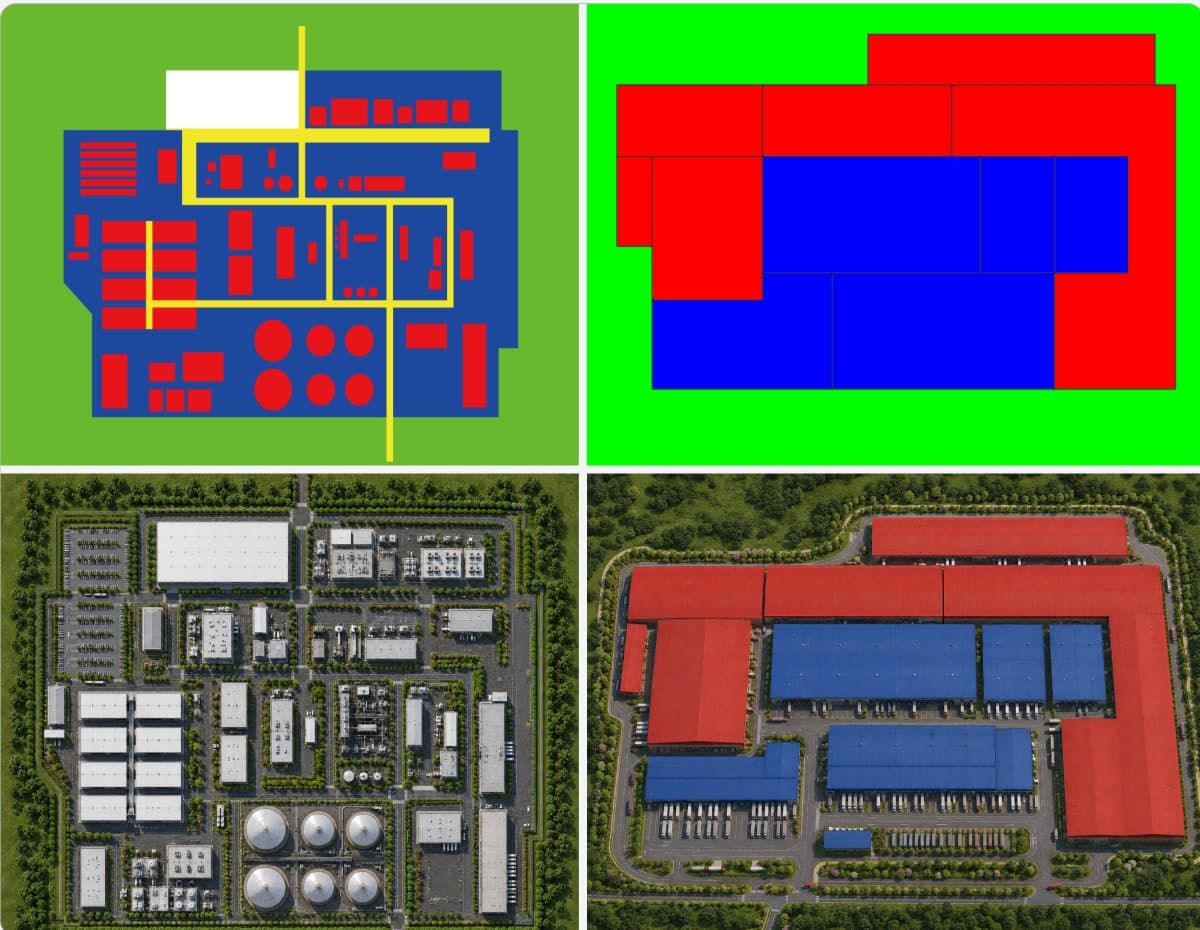

On-premises rendering for industrial plants
Scattered design data, restructured so AI can use it. Fine-tuned models and section-level prompts run as a lightweight deployment on the client's own infrastructure.
Phase 1 live, now in support and maintenance
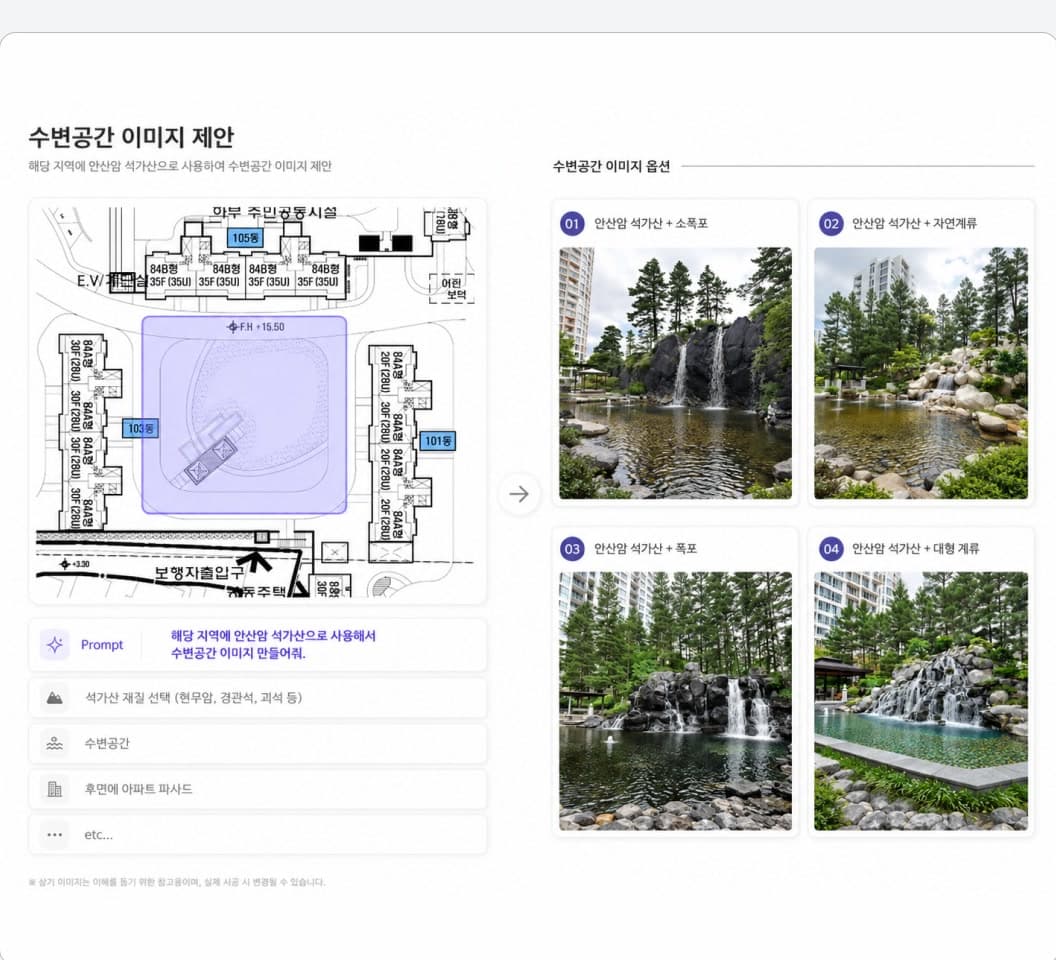

Landscape options from site plans
Select an area on an early landscape plan and describe what you want. A model trained on Korean residential landscapes generates the options.
4 landscape options per area, in one pass
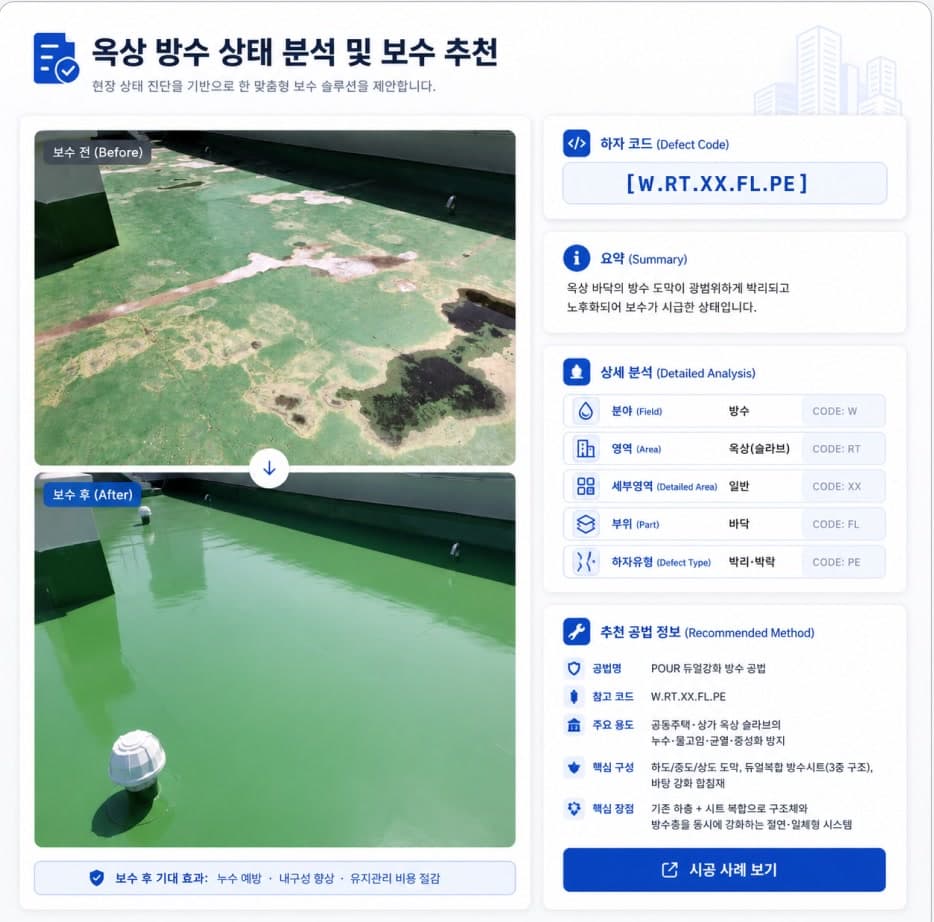

Defect repair: method, estimate, and preview
Classifies a defect photo and grades its severity, picks a repair method and estimate from a database of past jobs, then shows what the finished repair will look like.
One photo to method, estimate, and preview